Showing posts with label bedtime. Show all posts

Friday, November 27, 2015

2 year old bedtime battles

Question:  My 2 year old puts up a fight with me if I put her to bed. If my hubby does it she goes down without a fight. Same with naps. I'm with her more than he is and she prefers me over him most of the time. Hubby is about to take a third shift job so bedtime will be completely up to me. What do I need to do to make things go more smoothly?

Answer:  This may be a power issue. Two year olds start to realize that they are not the center of the universe and that you have relationships outside of them and want more power and control with independence. 

Try making a bedtime book. This give her more power. Make a list of all the things you do at bedtime. Take a photo of her doing it. Snack, teeth, pj, story, kisses, etc. Put them in order and slip them into a photo book and call it your bedtime book. When it's time for your bedtime routine, give her the book and ask her what comes first? She will feel like she is more in charge of her bedtime by following the book and telling you what comes next. 

Tip: This works best when you catch her sleep window and are putting her into her bed before she is yawning and rubbing her eyes. 


Thursday, May 7, 2015

Tired one Minute, Ready to Play the Next! What's with that?


 Is your baby tired one minute, ready to play the next! 
What's up with that?    
                                      
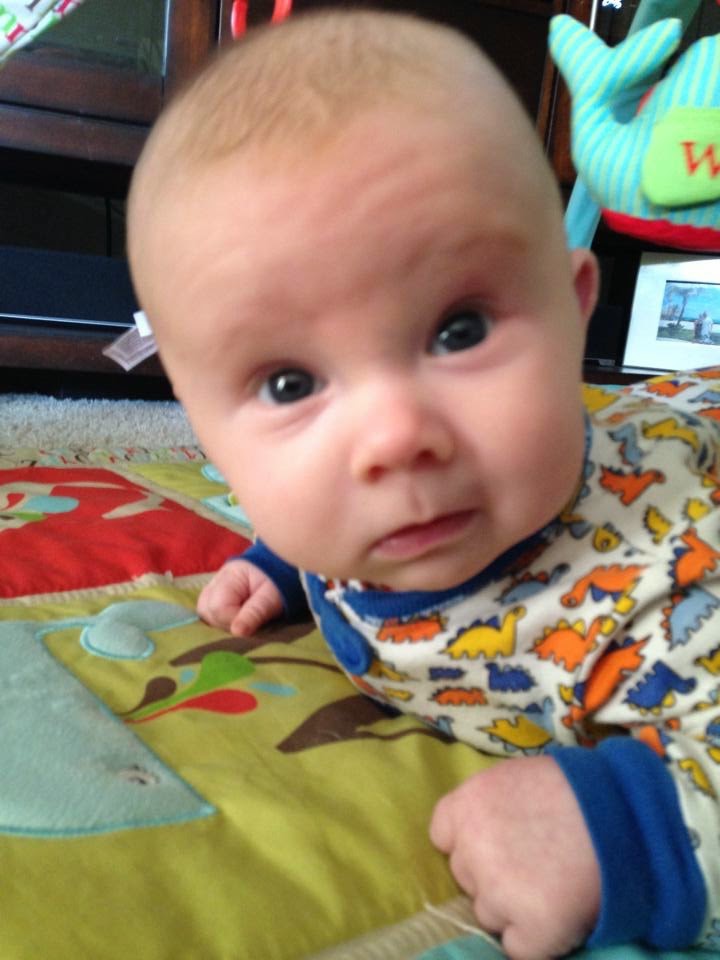
Congratulations, You have just missed the sleep window.  This blue eyed baby had these two pictures taken just a minute a part.  She is 6 months old and she is very alert.  It is hard to catch her sleep window because her overtired state (Cortisol Rush) comes right on the heels of Yawning and Eye rubbing, or in other words, the obvious tired signs. It's just not fair!  One minute you see that she's tired, then she is ready to play again. 

Here's what you can do.  
First, try to catch the early tired signs.  
Do you know what those are?

I ran a pole in my "Sleep Sisters-Get Quiet Nights"  Facebook group of Early Tired Signs that the mom's had observed in their babies. 


They Mentioned:
Zoning out
Staring off into space
Disinterest
Disengaging
Glassy eyes
Blinking more slowly
Clumsy (Toddlers)
Scrunching up their face
Clenching their fists
Grunting or Grizzing
Laying their head on the floor
Crawling over for a hug
Putting their head on mom's shoulder
Pulling Ears or Hair
Red Around the eyes or eyebrows (this can be an early or a late sign)
Hands get warm (this was the first time I had heard of this unique sleep cue) 

Early Tired signs can be VERY hard to catch. They are more subtle and may only last for a moment. If you see an early tired sign, put your baby to bed even if it only lasts a minute and your baby seems happy to keep playing and stay up.  Your baby has entered the sleep window and you just saw the opening act.  The closing act (yawing and eye rubbing) you want to happen after her head is on the mattress if you have an Alert baby like this one.  

If you can not see the early tired signs, no matter how hard you try, that does NOT mean that you aren't a good mom.  That happens all the time.  Especially if you have an alert, smart, spirited baby.  That would be like feeling guilty for not knowing what every cry means.  Tired, Hungry, Overstimulated, Poopy, Bored, etc.  (Oh wait, you do feel guilty about that?)  No need to feel guilty about that.  Throw that guilt out the window.  Many babies don't have the range of crying for all the different things, and mom's may not have the sensitive hearing it takes to distinguish the cries or the life experience to tell the difference.  Not your fault.  Your effort is enough.  Here is a cheat sheet for Fussy Signs you can't Identify.  Print it out and stick it to your refrigerator. 

A Sleep Deprived Parent's Cheat Sheet for Guessing 
Why She's Crying


So here is a trick to help you figure out the sleep window when early sleep cues are not obvious. 

Make a timeline of your sleep. 
  • Wake up time. 
  • Early tired signs (See the above list)
  • Late tired signs. (Yawning, eye rubbing) 
  • Cortisol rush (Burst of Energy)
Now figure out how long your wakeful window is. And How long your sleep window is. If you can't figure out how long your wakeful window is, look at the time difference between wake up and cortisol rush. Now subtract 15 minutes from that time. That's how long your wakeful window is. That's when you should have been seeing early tired signs. It can be hard to see those early tired signs. Especially with alert children.

For babies 6-9 months the wakeful windows are often 2 hours long so naps are 2 hours apart. We call this a 2-2-2-2 schedule. The 2 represents a wakeful window. 

For babies 9-18 months the wakeful windows are more like 2-3-4. Wake up, then two hours of wakefulness. Have a nap then three hours of wakefulness. Then have an afternoon nap and then 4 hours of awake time, then it's bedtime. 
I call this a 2-3-4 schedule. 

For toddlers 17 months to 2 years old, the first nap gets dropped and it's more of a 6-4 schedule. Wake up, awake for 6 hours, then nap. Then up to 4 hours and then it's bedtime. 

For toddlers over 2 years old, the wakeful windows are much less predictable so watch for the early tired signs. 

Remember, It's your effort and responsiveness that makes you a good parent.  Not the number of perfect days you have. 


Tracy Spackman is Certified Gentle Sleep Coach
www.GetQuietNights.com


Friday, April 17, 2015

What's with the 4 month sleep Regression?!

 Many babies increase their waking at night around the 4 the month.  They seem more distracted and sleep goes out the window.
There is tons of brain development going on in their little head. 
The vision changes. Your baby can now see farther away and with all the added detail to her world,  she is more perceptive and therefore more distracted.  
Sleep falls apart and naps are hard to get and often feeding is harder as she is more easily distracted.  
This is when the baby is ready to lean sleep skills. Previous to this, sleep is innate. Either she can do it or she can’t. Sleep self soothing is a learned skill. This skill enables her to relax and organize  her body to sleep when she is tired and it also helps her to better manage her emotions when in stressful situations. This doesn't mean you have to jump into sleep coaching, many parents wait until after 6 months, hoping it will get better all on it's own.  Sometimes it does.  It's all about temperament.
Many parents tell me their child’s temper tantrums stop and their child is more even tempered once they are able to sleep without a sleep crutch. So, your child is reaching this time. It’s very exciting and frustrating at the same time. If you want to do sleep training, it’s still a good idea to wait until 6 months if you are going to follow a book. If you need better sleep now, that’s where I can help. To do something gentle like I do, your baby still needs to be at least 18 weeks old and at least 2 weeks into the more distracted phase of the 4 month sleep regression and you would want to maintain appropriate night feedings as part of your plan. 
Until you have a plan in place that you feel confident in and can be consistent about, keep doing what ever crutch gets you both as much sleep as possible. Swings, nursing, co-sleeping, rocking etc. these are blessings until you are ready for change. Please check out my website www.GetQuietNights.com and read the success stories of parents going through what you are going through.  I have recommended books and a blog on there too. 
I wish someone has explained it to me when my babies were that age.

For sleep consultations, visit www.GetQuietNights.com
Tracy Spackman is a certified gentle sleep coach. That means she will teach you how to help your child sleep through the night without doing Cry It Out.
Free 15 min sleep assessments. Call 602-524-7610

Monday, April 13, 2015

What age can you send kids to put themselves to sleep?


It's always a good idea to take your kids to bed instead of sending your kids to bed. 

I was able to make the switch by the time my older children were at the age 10 or 11 years old. Before that, bringing them to bed was the beginning part of some sweet family rituals that prepare them for life success.

For my 2 youngest boys, I helped them brush their teeth and then we moved on to me reminding them to brush their teeth.  I started reading them stories and now, after tucking them in, they read for a short while until it's lights out time.  If I try sending them to bed, they just play, fool around and make a mess. 

I remember an episode of Super Nanny I happen to see and she told that mom she was not helping the situation. The program showed a video of the mom yelling at the kids to go to bed while she watched TV. Over and over again. Of course the kids didn't listen. Super Nanny suggested she "take" them to bed instead. It's a great suggestion for all of us.

Check ups will still be needed after you pass this milestone but it really is fantastic to send them to bed when they are old enough to do it all themselves but it comes after many years of doing it together.


Tracy Spackman is a Certified Gentle Sleep Coach in Phoenix Arizona.  Join her Gentle Sleep Support Facebook Group Called "Sleep Sister-Get Quiet Nights"


Tracy Spackman

Certified Gentle Sleep Coach

Thursday, September 25, 2014

Is Cry It Out the only option? NO!

There seems to be a lot of pressure on moms to have a quiet, sleeping through the night baby at a very young age. But in fact this is just not normal. It's not about weight, or even weeks, it's about developmental readiness and temperament.

In and around the 4th month of age there is a lot of cognitive development. Some babies may be ready as early as 18 weeks and others need more time to grow and bond. Follow your heart and do what you feel is best for your baby. Bond, nurse, co-sleep, wear, whatever feels safe and right. It doesn't matter what culture, neighbors, sisters or mothers in law say about it.

The range of what a baby can do it very broad. Some babies are naturally good sleepers. Others have a difficult time shutting down their minds to sleep. Talk to your doctor and still listen to your intuition. When he says babies wake a lot at night, he's right. And some babies wake more than others. If you are sleep deprived and going crazy, try motion naps in the stroller, swing or carrier and part of the nights in a swing laid all the way back. Does co-sleeping work for you? Would room sharing help? Be responsive.

Many mom's get repeated advice to just do Cry It Out.  There are many articles and posts about the negative effects of Cry It Out.  If that's just not for you, rest assured,
you have other options.  The No Cry Sleep Solution is a long, slow drawn out, baby step plan that works for many families.  But for some families it's too long.  The Good Night Sleep Tight book by Kim West is great if you have an older baby.  For younger babies, it's too visually stimulating and not responsive enough.  There are methods of camping out where you sleep in your baby's room. Methods of touching and shushing.  Methods of Picking up and putting down.  So many methods.  What is right for you?

I have found that there IS perfect combo of methods that works quickly and easily but definitely takes more effort than Cry It Out.  Where is this book?  It's not written. It's a combo made specifically for you child's temperament and age.  You get that from a gentle sleep coach. That's the advantage of a sleep coach, she will tell you what to do, work with you to find the fastest and most gentle approach, tailored for your child's needs and his parents goals.

 If you are at your wits end and just need a plan, I can help. I may just help you have reasonable expectations or there maybe a few things you can do to help your baby sleep longer stretches until your baby is ready to do more. But if you are fine, keep doing what you are doing. If you don't have a problem with the waking, it's not a problem. I can't believe how fast they grow. Get past the 4 month vision changes and brain development and then see how you are doing. It's so fun when baby can see you from further away. The increased perceptiveness is exciting for your baby and very distracting. So much of the world to see. Get to at least 18 weeks and re-evaluate. If you can hold off until 6 months, even better but I understand if you can't get that far.

If you wonder if you have realistic expectations, I can talk to you about that for free. I speak on that subject regularly at the local moms groups, hospitals and baby stores and on Facebook groups. Let me give you some coping strategies.

Take a few minutes of my time for free. 602-524-7610. Call, text or message me to set up a free 5-15 minute call. I'm here to help. If you know you are ready to make major changes and just want someone to give you step by step instructions that fit with your family goals, book a consultation and we will get you all sleeping in no time.

Tracy Spackman
Certified Gentle Sleep Coach
602-524-7610
www.GetQuietNights.com
https://www.facebook.com/QuietNights

Saturday, June 28, 2014

To bathe or not to bathe at bedtime, that is the question.

Do you give your little one a bath before bedtime? Or read her a book? Serenade her with songs and kisses?
There was a small study done that showed that the children who got a bath thirty minutes before bedtime had an easier time going to bed. 


But why?

Was it the consistency of a regular routine? Did a bath relax them and thus encourage the production of the calming hormone, melatonin?

 What happens if the bath is very fun and exciting and ends up stimulating your child? If she is already tired and ready to sleep, would the bath just wake her up and give her a second wind? (Cortisol  rush—NOT what you want at bedtime!)
So, let’s approach bedtime in a totally different way (I say this a lot). Think of the “Bedtime Routine” as having two pieces. 

First, we have the wind-down activities. These are all the things you have to do to prepare your child for bed, such as supper, meals, baths (only if you like it and it is calming for your child), fresh diaper, maybe even a massage while she are undressed for the diaper, pyjamas and so on.  For the wind-down, it is best to do the activities always in the same order, but how long you spend on each activity can vary. This will give your activities consistency and a good flow. The routine will become familiar. If you like to do the bath every other night or less frequently, place it in the same slot in the order of activities.

Second, you have your routine of signals to sleep: three to five things that you do in the same order for the same amount of time in the same way. For example, you could do a story, a song, a prayer and a kiss.  When done consistently, these things will signal to your child that they are about to be put in bed.

So here’s the secret…

Between the wind-down and the signal routines, watch for sleep cues. If you see sleep cues while doing your wind-down, end it, skip the last steps if necessary, and do your signal routine.  Catching the sleep window helps everyone get to sleep more easily. If you can slide smoothly through the routines and catch the sleep window, you will be in a better place to get sleep success.

For more sleep secrets, call me for a gentle sleep consultation.  I create gentle sleep plans that don’t involve “crying it out”.

Tracy Spackman
Certified Gentle Sleep Coach
www.GetQuietNights.com
602-524-7610 
Call for a free 15 minute sleep assessment.
Specializing in alert, bright eyed, observant, curious, spirited babies and children.

Wednesday, April 23, 2014

Bedtime Snacks: Do you think the food children eat before they go to bed affects their sleep!?

QUESTION: 
Monica Asked…
“Do you think the food children eat before they go to bed affects their sleep!?  What are good examples of snacks before bed?”

ANSWER:
Absolutely! Milk right before bed increases the need to pee at night. Truly! Choose water instead if  you are beyond the age where night time calories are still needed. (That's a whole other topic! lol)
Some children react strongly with gas to dark green veggies like broccoli.  I know they are so good for you (highest protein per calorie than any other food) but it just takes time to adjust to that type of food. But it's good to know the cause of the discomfort.

The more obvious things to avoid are; caffeine (6-7 hours before bedtime), so… no coffee (isn’t that a no-bainer?) and chocolate and sugar, large meals or large fluid intake before bed, foods containing MSG, Foods containing large amounts of the amino acid tyrosine (foods with yeast, aged cheese, fermented products, cold milk).  This is getting very detailed and technical.

Also avoid eating protein close to bedtime. If you or your child is needing a light snack before bed that will aid sleep, choose things like; cashews, eggs, cottage cheese, chicken, turkey, warm milk, cereal, pasta, bread/crackers, grains, pancakes waffles, bananas and starchy vegetables. (This list does not take into account possible food sensitivities, Another whole other topic.)

Avoid sugary snacks and eating too close to bedtime.

Stock up on Almonds, raw almond butter, apples, bananas, berry jam, blueberries, carrots, cashews, celery, cottage cheese, string cheese, free-range chicken, cinnamon, eggs, flaxseed, frozen yogurt, grapefruit, halibut, hazelnuts, kale, lemons, lentils, mixed greens, oats, olive oil, oranges, pumpkin seeds, salmon, shitake mushrooms, low-fat soy milk, strawberries, tofu, ground turkey, whole-grain bread, whole wheat pastry flour, white or brown basmati rice, yogurt.

I wish I could say I came up with this all on my own but I find the best answers to the questions I don’t know off the top of my head.  I got it partly from Andrea Strang from Kindersleep.com who I work with doing sleep consulting for and she credited Health Solutions for Sleep, Dr. James Rouse & Sleep Naturally, Stephen Holt, M.D.


Tuesday, April 22, 2014

DIY Wake Up Lights

Wake up Lights-Great Question for Do It Yourselfers


Jessie Krefting (mother of 2 challenging sleepers) asked...
"Hi Tracy, Is there a way to make a sleep clock instead of buying one so that it doesn't interfere with Reese's cave-like room?"
Answer:
Yes. Dark rooms are best and many wake up lights you buy have a light that is on all night. You can make one yourself. Use any small lamp that you have and use a small green bulb like an outdoor Christmas light or a chandelier light bulb. If the base of the bulb is too small for your lamp, you can get an adapter piece to screw into the lamp that changes the base size. Plug the lamp in to the wall through an appliance timer like you would use for Christmas lights and set it to go on at the wake up time like 6am or 7am. If you can use a green bulb, you can teach your child that green means go! Talk about the light at bedtime and again in the morning to reinforce what you expect. Everything you need you may have at home already or can be found for low cost at your local home hardware store.

If you need sleep help, give me a call.  I create personalize sleep plans to help children sleep though the night without using Cry It Out.
Tracy Spackman
Certified Gentle Sleep Coach
602-524-7610
www.GetQuietNights.com

Monday, April 21, 2014

"Blanket Races" Help Children Sleep Through the Night

I get great Questions on my Facebook page https://www.facebook.com/QuietNights and here is the last one.
Great Question:  Tracy, when can babies sleep without the sleep sack? When is it safe to switch to a blanket? It's starting to resemble spring here and hopefully allow for open windows soon.


My Answer:  Usually around the time they switch to a toddler bed after 2.5 years old or when they can pull the blanket up over themselves on their own after 2. Sleep sacks come in all weights and sizes and prevent babies from getting a leg up to climb out of their cribs as they get more adventurous.

A fun way to teach a child to pull up their blankets is to do "Blanket Races" It's a game I made up. You and your child lay on the floor covered in a blanket. (Each your own blanket) On Your Mark, get set, GO! Kick off the blankets. Mark, get set, GO! Pull them back on. On Your Mark, get set, GO! Kick off the blankets. Mark, get set, GO! Pull them back on.   Repeat.  The Mom or Dad races the child to get the blankets back on the fastest and usually ends in a lot of giggles. This game can help your child develop the muscle memory to pull up their blankets in the night in their sleepy state when they wake up between sleep cycles if they have kicked them off.  Don't do it right before bed at night as it will get you both all riled up.  It's better as an afternoon or morning game.

I need to get someone to make me a video of this blanket race game.  Any takers?  Send your video to me at Tracy@TracySpackman.com
www.GetQuietNights.com  602-524-7610

Thursday, April 17, 2014

Early Rising Sun Increases Early Rising Sons and Daughters


Exposing your body to bright light at the same time every morning helps to keep your body clock on the same rhythm so if the spring sun is rising earlier, you may be waking earlier and so is your child.  To help prevent this early rising and help your child sleep through the night you can use this  trick...

Use black out blinds and Blue Tape.  Use blue tape (painter's tape) to tape the blinds to the walls to seal out any cracks of light that slip through the edges.  If you are buying blinds to fit, order them to fit outside the frame. This blocks more light.

Some families get more creative using cardboard or tinfoil to block all the light for a light sensitive sleeper. Even hanging a blanket over the curtains or blinds for an extra layer of darkness may help.

Our Sleep needs are influenced by our Circadian rhythms. Light and other signals (like sound and food) effect our Circadian rhythms.  Using white noise can be a great signal.  It becomes a sleep association and encourages the body to produce Melatonin. (The drowsy hormone) Darkness also increases the Production of Melatonin helping you or your baby sleep.

 Circadian rhythms are regular changes in mental and physical characteristics that occur in the course of a day. (circadian is Latin for "around a day")...Let's get more technical.

 Most circadian rhythms are controlled by the body's biological "clock."  The body's "clock" is called the suprachiasmatic nucleus or SCN and is actually a pair of pinhead-sized brain structures that together contain about 20,000 neurons. The SCN rests in a part of the brain called the hypothalamus, just above the point where the optic nerves cross. Light that reaches photoreceptors in the retina (a tissue at the back of the eye) creates signals that travel along the optic nerve to the SCN.
Signals from the SCN travel to several brain regions, including the pineal gland, which responds to light-induced signals by switching off production of the hormone melatonin. The body's level of melatonin normally increases after darkness falls, making people feel drowsy. The SCN also governs functions that are synchronized with the sleep/wake cycle, including body temperature, hormone secretion, urine production, and changes in blood pressure.

By depriving people of light and other external time cues, scientists have learned that most people's biological clocks work on a 25-hour cycle rather than a 24-hour one. But because sunlight or other bright lights can reset the SCN, our biological cycles normally follow the 24-hour cycle of the sun, rather than our innate cycle. Circadian rhythms can be affected to some degree by almost any kind of external time cue, such as the beeping of your alarm clock, the clatter of a garbage truck, or the timing of your meals. Scientists call external time cues zeitgebers (German for "time givers").
This information can be found here from the NINDS (National Institute of Neurological Disorders...)

If your baby isn't sleeping through the night or is having trouble with early rising, give me a call. I can help you figure out what you need to do to get your baby on track.
Call Tracy Spackman 602-524-7610
www.GetQuietNights.com
https://www.facebook.com/QuietNights
For Consultation Prices go to http://getquietnights.com/schedule-a-consultation/

Friday, April 4, 2014

Tracy Talks about Gentle Sleep Coaching

I thought it would be cool to have a video of me talking about sleep while I was holding a sleeping baby.  So there I am, I had an audience, a video recorder, and a sleeping baby with a few talking points all ready to go... And of course the baby work up. LOL! It still worked out. Here is the link.


https://www.youtube.com/watch?v=5f3CxNpdEhk


No special equipment, no special make up (clearly), no editing.  Raw talk about sleep. Real.


I am a Gentle Sleep Coach who teaches moms, dads and families how to get kids to sleep through night. Using gentle methods (not cry it out), evidenced based behavioral science to work with the family and their sleep goals and family dynamic to help them teach their child how to self soothe and sleep through the night. I look at the sleep environment, the schedule, the bedtime, the naps, the sleep crutches, the habits, the temperament and the past sleep history. 

Whether you are nursing to sleep, rocking to sleep, holding to sleep, co-sleeping, sleep fighting, I can help you improve your child's sleep and get you your evenings back. Parents need wind down time too. If you aren't getting at least 5.5 hours of sleep (even broken up sleep), you may start showing signs of "crazy". Sleep deprivation skews your perspective, increases anxiety, decreases your body's natural immunity and ability to think clearly and ability to handle stress. 

I have been a gentle sleep coach for over 3 years, I am trained and certified by Kim West the Sleep Lady and spend everyday helping families sleep. This is my full time passion. People have called me a sleep coach, a sleep trainer, a sleep doula, a sleep consultant, a sleep counselor, a sleep guru, a good friend, a miracle worker and worth every penny! 

I work with children 4 months (18 weeks) to 6 years old. These children typically need 10-12 hours of sleep. I have worked with 8 year olds too and I have a special book I make for older children to help them focus on their sleep issues in a healthy way. I have even been able to help some teenagers. (Teenagers need 9 hours of sleep) 

Babies, toddlers and preschoolers greatly benefit from sleeping through the night and if the parents are ready to make a change to help them be successful with sleep, I can help. I can build you a keep co-sleeping plan, a get out of co-sleeping plan, transfer to a crib plan, only coach at mom's house plan, a daycare plan, a single mom plan, a dad does it all plan, a gentle plan, a personalized plan with methods that work. I also give classes, workshops and speak at mom's groups and community organizations. If you need a sleep consultation visit www.GetQuietNights.com and contact me to set it up.

Call me for a free 15 minute sleep consultation.

Tracy Spackman
Certified Gentle Sleep Coach
602-524-7610
www.GetQuietNights.com
www.facebook.com/QuietNights 
@GetQuietNights  on Twitter


Wednesday, March 19, 2014

A consistent gentle plan usually works but what if it doesn't...

Most people who attempt to improve sleep through sleep coaching just need a solid method and a lot of consistency.  If sleep coaching has been a real challenge and you just can't get there 100%, there may be an underlying problem to investigate. Sometimes as a sleep coach I feel like a detective. Some medical issues that mess up sleep are;

  • Low Milk Production-breast milk should be thick and yellowish.  If it's white and thin, there may be a problem if your child always seem to want to nurse and can't sleep long stretches.
  • Tongue Tie-This often gets overlooked when it's a simple fix.
  • Sensory Processing Issues-An OT (Ocupational Therapy) Assessment can be good for all kids.  Maybe your child perceives the world differently than we do.
  • Circadian Rhythm Abnormality-Your body's natural body clock is off  http://www.ncbi.nlm.nih.gov/pubmed/23385698
  • Melatonin regulation issues-Without the body's natural rising levels of Melatonin in the evening, it is difficult to fall asleep 
  • GERD/Reflux-Talk to your Doctor about this and all these issues.
  • Allergies-from environment allergies to food sensitivities, when sleeping things tend to feel worse.
  • Asthma-a chronic (long-term) lung disease that inflames and narrows the airways
  • Anemia-your blood does not carry enough oxygen to the rest of your body. The most common cause of anemia is not having enough iron.
  • ADHD-sometimes is misdiagnosed and is actually a sleep issue but most ADHD also have sleep issues.
  • Restless legs-also can be the result of low iron and Apnea.
  • Night Terrors-There may not be anything you can do about this other than keep your child safe and calm.
  • Seizures-There are tons of types of Seizures.
  • Apnea-narrow or blocking of the airways that will wake you up if you can breathe-a startling way to wake.
  • Anxiety-With this, Cry it out is not the way to go.
  • Medications that are stimulants-of course this will make a difference, talk about the timing of dosage with your doctor.

I usually find that a consistent and gentle behavioral modification method works for most families and there is no underlying condition but if things still seem not right, this is where you start looking. Sometimes I see red flags in your sleep history and we can address it sooner rather than later but it helps to book a consultation with your Medical Doctor or Natrualpathic Dr just to discuss sleep. There often isn't enough time to add sleep to the list of things to discuss at a normal well child visit.
50% of pediatricians do not ask about and/or screen for sleep issues. A gentle method is the best place to start and then we go from there... Call me if you need help. 602-524-7610  www.GetQuietNights.com